
Welcome to our blog dedicated to the fascinating world of carton printing slotting machines. Here, we delve into the intricate workings and immense value these machines bring to the packaging industry.
Introduction
But how exactly does this machine operate? Let’s delve into the intricate workings of a printing slotter and uncover its core functions. This guide will explore the essential components, operational techniques, and advanced methods to help you achieve precision and efficiency in your machining tasks.
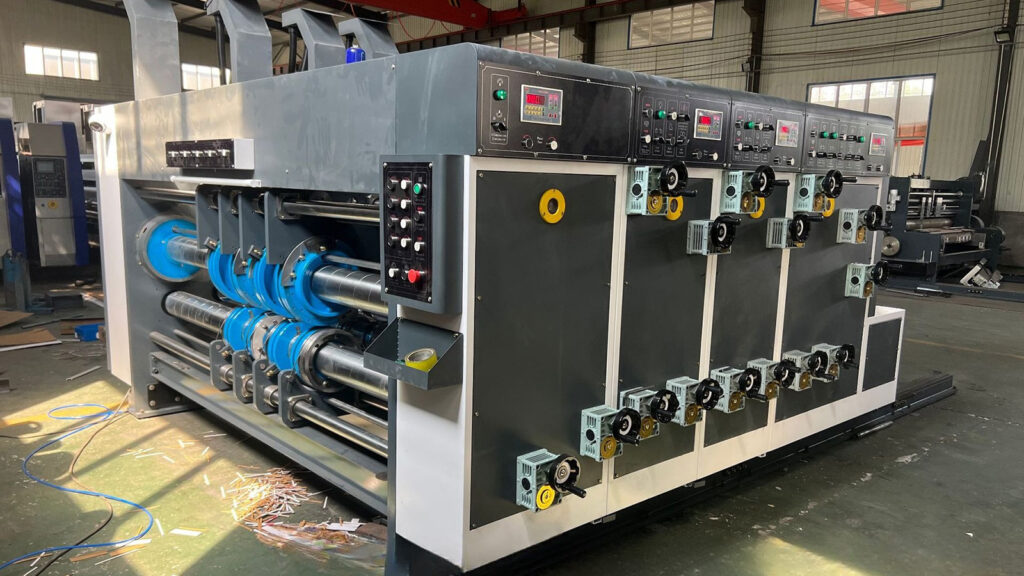
Reciprocating Ram: The Heart of the Slotter
The heart of a printing slotter is its reciprocating ram, which houses the cutting tool and moves vertically within a guideway. The ram’s motion is similar to that of a piston in an internal combustion engine, traveling up and down repeatedly. This vertical movement allows the cutting tool to engage and disengage with the workpiece, progressively machining the desired shape.
Clamping and Positioning: Ensuring Workpiece Stability
The workpiece is typically clamped onto a rotary table or a table with T-slots for secure positioning. This table can be rotated or moved along the machine’s base to achieve precise alignment with the cutting tool.
Printing slotters can perform a wide array of operations, including:
- Cutting keyways: Keyways are grooves machined into shafts and hubs to accommodate keys, which are used to transmit torque between components.
- Creating slots: Slots are used for various purposes, such as accommodating set screws, guiding components, or providing access for tools and fasteners.
- Machining internal profiles: Printing slotters can machine complex internal profiles in workpieces, such as splines and gear teeth.
Tool Head and Milling Cutter: Precision Cutting
The tool head, the brain of the operation, houses the rotating milling cutter. This cutter, typically made of high-speed steel or carbide, possesses multiple cutting edges that engage with the workpiece. The head, mounted on a ram, can be adjusted vertically and horizontally to achieve the desired depth and position of the slot.
Feeding the Workpiece: Manual and Automatic Controls
The workpiece, firmly secured on the table, is fed into the rotating cutter through a combination of manual and automatic controls. The operator carefully adjusts the feed rate, ensuring a smooth and controlled engagement between the cutter and the material. This precise control is essential for achieving the desired slot dimensions and maintaining the integrity of the workpiece.
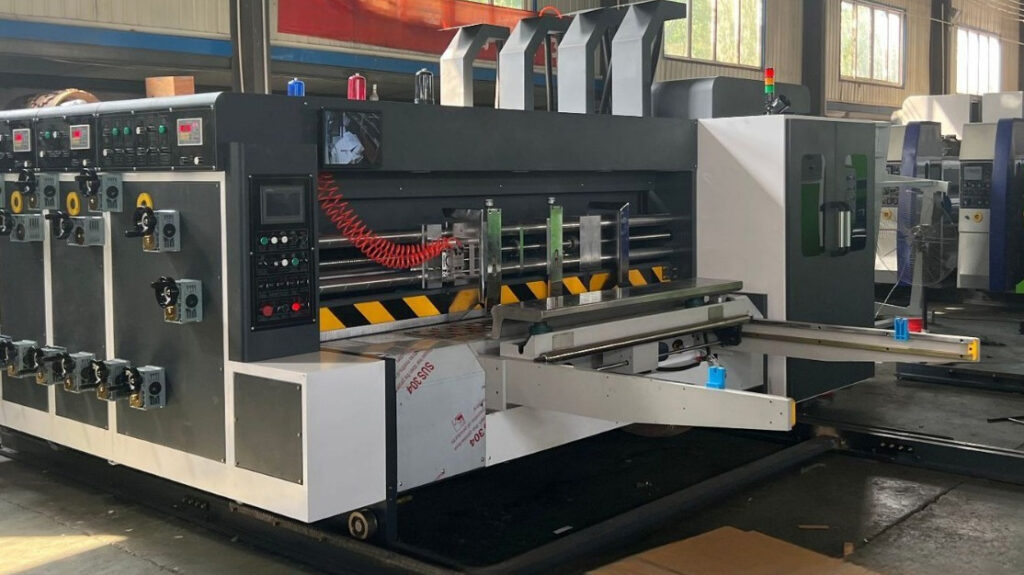
Advanced Techniques for Precision and Efficiency
Mastering the Art of Feed Control
Feed rate, the speed at which the cutting tool travels through the material, plays a critical role in achieving a clean, precise slot. Excessively high feed rates can lead to tool breakage, surface damage, and inaccurate dimensions. Conversely, excessively low feed rates can result in inefficient machining times and suboptimal surface finishes. The ideal feed rate depends on factors such as the material being cut, the tool geometry, and the desired depth of the slot. By experimenting with different feed rates and observing the resulting surface quality, you can develop an intuitive understanding of the optimal range for various scenarios.
Optimizing Tool Path Strategies
The path that the cutting tool follows during the slotting process significantly impacts both the accuracy and efficiency of the operation. Straight-line slotting, while straightforward, may not be the most efficient approach for complex shapes. By utilizing techniques such as helical interpolation or trochoidal milling, you can achieve smoother tool engagement, reduced cutting forces, and improved surface finishes.
Harnessing the Power of Specialized Cutting Tools
The choice of cutting tool plays a crucial role in the success of any slotting operation. Different tool geometries excel in various applications. For instance, slot drills are specifically designed for creating narrow, deep slots with minimal burrs. End mills, on the other hand, offer greater versatility for slotting operations of varying widths and depths.
Conclusion
The printing slotter, through its ingenious mechanism, offers remarkable versatility and precision in machining keyways, slots, and internal profiles. By mastering the core functions of the reciprocating ram, tool head, and milling cutter, and by implementing advanced techniques in feed control and tool path optimization, you can achieve exceptional results in your metalworking projects. Whether you are a novice machinist or an experienced professional, this comprehensive guide equips you with the knowledge and skills to harness the full potential of your printing slotter, ensuring precision and efficiency in every cut.
Comments
Tags
2 color flexo printer
4 color flexo printer
Automatic Flute Laminator
Automatic laminator
carton printer
Corrugated Cardboard Production
Corrugated paper board production line
Die Cutting Stacker
Double Piece Gluer
Double Piece Gluing Machine
Film Laminating Machine
Film laminator
Flexographic printer
Flexographic printing press
Flute Laminating Machine
Flute Laminator
Four color carton machine
Four color die cutter
Four color flexo printer
Gluer machine
Gluing machine
High Speed Double Piece Gluer
High speed laminator
Ink Printing die Cutting Machine
Laminating Machine
Laminator
Medium speed laminator
Paperboard separator
Partition Slotter
Plate free die cutter
Pre-coating film laminator
Rotary die cutting machine
Semi auto laminating machine
Semi auto laminator
Semi automatic two color ink printing slotting machine
Seven ply Corrugated Cardboard line
Slotting Die Cutting Stacker
Small grooving machine
Small slotter
Stacking machine
Stitching machine
Strapping machine
Thin knife machine
Three Color Flexo Printer
Two color flexo printing machine